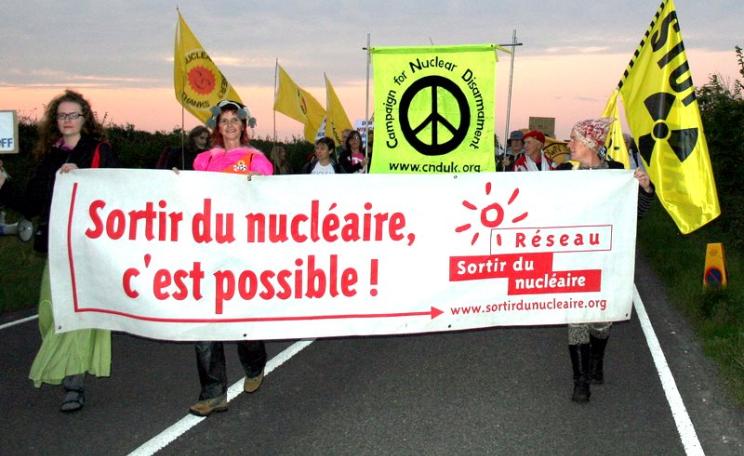
Next month thousands will gather in Wales to shut down the UK's open cast coal mine at Ffosyfran, whose 3,500 acres abut both Merthyr Tydfil, one of Britain's most deprived communities, and the glorious Brecon Beacons national park. It will be one of dozens of coordinated actions across the UK, and around the world, to bring the age of coal to the rapid end it so richly deserves.
BP's plans to explore for oil in the deep seas of the Great Australian Bight came under fire today at the company's Annual General Meeting in London, writes Graham Readfearn. The drilling would risk the ocean's rich marine wildlife - while blowing a massive hole in Australia's COP21 emissions targets.
Disregarding revelations of systemic political corruption in Brazil's hydropower sector, President Dilma Rousseff is ploughing ahead with a cascade of giant dams on the mighty Tapajos river. Among the companies touting to win huge construction contracts are France's EDF and Engie, and Germany's Voith and Siemens - in a consortium led by Brazil's Electrobras, which stands accused of high-level corruption over four other dam projects.
The nuclear industry is forever reinventing itself with one brilliant 'new' idea after another, Amory Lovins wrote in this classic 2009 essay. But whether it's touting the wonders of future SMRs, IFRs or LFTRs, the reality never changes: the reactors they are building right now are over time, over budget and beset by serious, entirely unforeseen technical problems.
How to dissent peacefully from the corruption, waste and destruction of the world? By a mindful disengagement from evil, writes Julian Rose: from fossil fuel energy to propagandist media, from sweatshop clothing to the predatory financial system. Some of the steps we can take are easy, others very difficult - but what ultimately matters is the direction of travel.
France's energy minister Ségolène Royal has backed union demands for the EDF's Hinkley C project in Somerset to be re-examined, write Angelique Chrisafis & Chris Johnston - adding that the project must not go ahead if it would 'dry out' funds needed for EDF's renewable energy program.
Tate and now the Edinburgh International Festival have dropped BP sponsorship, writes Chris Garrard, with BP citing unspecified 'challenging conditions'. As indigenous campaigners accuse BP of 'sponsoring death in our communities', it's high time for the British Museum to follow their lead.
Precious World Heritage Sites that protect vital biodiversity and human cultures are at risk from oil decelopment and other industries. Under threat are not just nature, wildlife, land and water but the 11 million people who depend on the 114 sites' environmental quality for their livelihoods.
Tesla's Powerwall battery may be the poster-boy of the forthcoming dynamic power grid, writes Margaret McAll. But a far more accessible, low cost solution beckons: grid-interactive water heaters can soak up excess power from peaking renewables, reduce expensive peak demand, and cut power companies' need to invest in generation and distribution.
The rights of nature and of indigenous communities are enshrined in Ecuador's constitution, writes Kevin Koenig. But down in the Amazon the government is going full speed ahead with oil extraction on indigenous territories whose owners are committed to keeping their forests and waters pollution-free. A mighty battle is brewing that looks certain to come to a head this year.
Italian prosecutors have raided Shell's offices to investigate the suspicious acquisition of a huge offshore oil field in Nigeria, writes Vanessa Amaral-Rogers. The oil block, sold by the Government for $20 million to a shell company owned by the oil minister, was later acquired for $1.1 billion by Shell and Eni.
EDF in the UK may be propelled by its disastrous nuclear ambitions, writes Chris Goodall. But across the Atlantic it's another story: the company is the US's biggest wind developer, and selling its power, profitably, for under 40% of the price it has been promised for Hinkley C, including federal tax credits.
ExxonMobil has long known that climate change is real and dangerous, write Louise Rouse & Naomi Ages, while denying it in public and supporting climate change deniers. Now they accuse their critics of 'chilling' climate science and the search for solutions. The truth is the precise opposite.
An unprecedented coalition of 20 Attorneys General from US states and the Virgin Islands have combined to hold fossil fuel companies accountable for the deception they have inflicted on customers and the wider public over climate change, writes Lauren McCauley, in a move hailed as a 'turning point' in the battle to save the climate.
In 1975 Indonesia invaded the small Pacific country of East Timor, writes John Pilger, and then massacred a third of its population to suppress demands for independence. Now unearthed documents show the genocide was supported by Australia so it could grab the oil and gas reserves of the Timor Sea. Despite East Timor's independence, won in 1999, Australia is still stealing its oil and gas revenues worth $5 billion and counting.