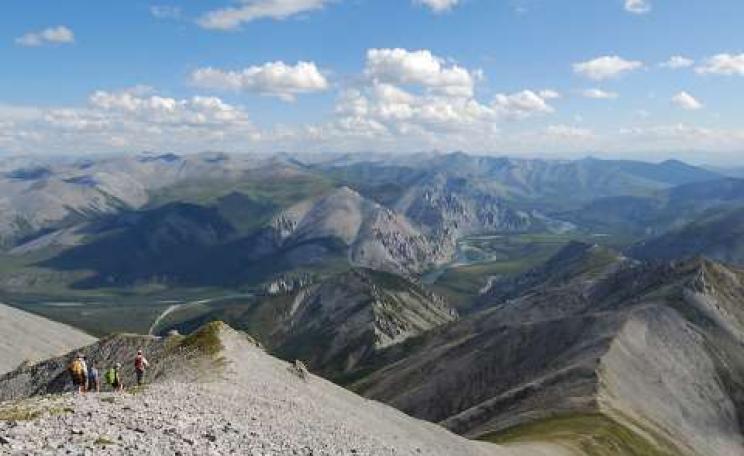
Next week the indigenous peoples of the Yukon challenge their Government in the Territory's Supreme Court, writes Jill Pangman. At issue, its plans to open the Peel watershed, a vast unspoilt ecosystem rich in wildlife and cultural meaning, for industrial development.
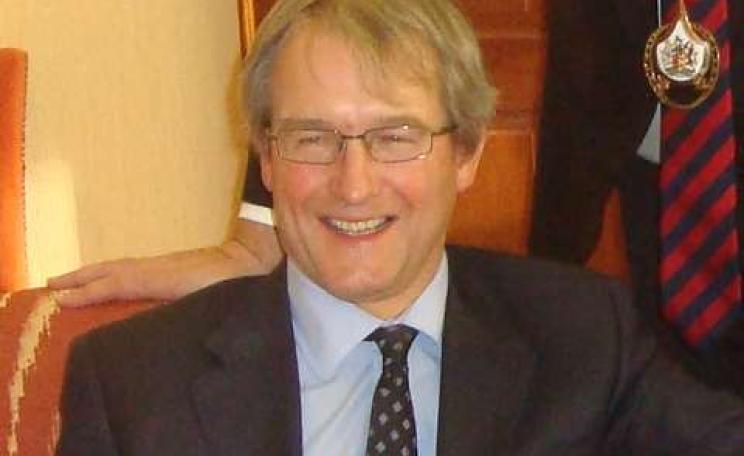
The Badger Trust has been granted leave for a Judicial Review of Environment Secretary Owen Paterson and Natural England over their 'irrational' decision to conduct the 2013 badger cull with no independent expert scrutiny.
As composer Jonathan Dove prepares for the premiere of his 'Gaia Theory' at the BBC Proms this month, he explains to Laurence Rose how his recent work has been inspired by a wake-up call - right from the very top of the world.
The World Bank is still deciding how to respond to Kosovo's request for funds to build a new 600MW power station burning filthy 'brown coal', writes Michael Brune. It's time for the World Bank, with strong US backing, to give the project a firm 'no way'!
The widespread use of neonicotinoid insecticides is causing a neurotoxic overload afflicting entire farm ecosystems from earthworms to bees, other pollinators and birds, writes Damian Carrington. A collapse in food production may inevitably follow.
A family of wild of beavers has established on an English river for the first time since Henry VIII. But now the Government has decided to trap them and consign them to captivity in a zoo or wildlife centre. Defenders of wilderness are now demanding: keep our wild beavers free!
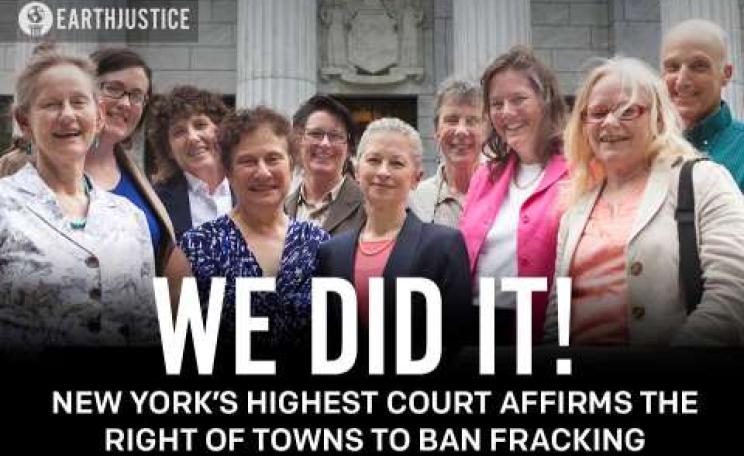
After a five year battle against fracking companies, the New York Court of Appeals has ruled that towns and cities can pass zoning laws that forbid fracking and other industrial land uses. The verdict will inspire other communities across the USA to enact similar measures.
Even creatures at the bottom of the ocean aren't sheltered from the detritus of human civilization, writes Sarah Zielinski. Everywhere they have looked, scientists have found plastic, glass and other trash littering the seafloor and collecting in canyons.
The United Nations has voted to legislate against human rights abuses carried out by transnational corporations, reports Lucia Ortiz. But the resolution, proposed by Ecuador and South Africa, was opposed by the US and the member states of the EU.
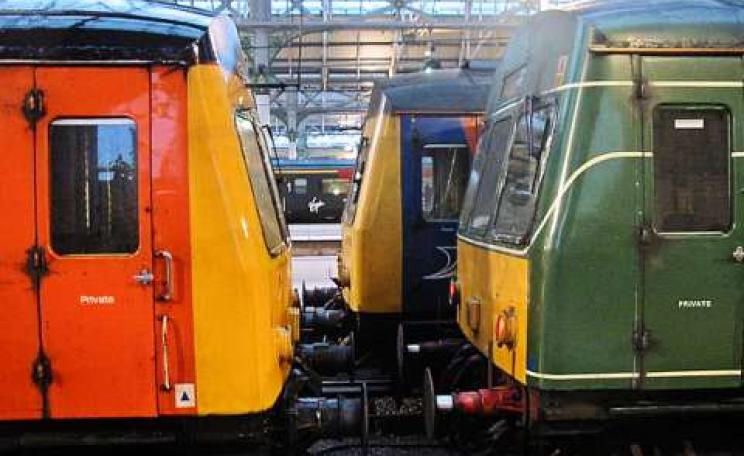
High speed railways connecting Liverpool, Manchester, Leeds, Huddersfield and Sheffield could transform the economy of the north of England, writes Ian Wray - creating a new mega-city that could challenge London's over-dominance.
Campaigners for the labeling of GMOs in food are winning their battle against corporate America, writes Ralph Nader. No wonder the corporations are fighting back with lawsuits and scare stories ... they're on the back foot, and they know it.
Massive dams in Sarawak, Malaysia, threaten to flood over 2,000 square kilometers of the world's oldest rainforests, displace 10,000s of indigenous people, and aggravate climate change, writes Amanda Stephenson - all to generate electricity that no one wants.
Tackling global warming with better public transport, increased energy efficiency, renewable energy, clean cookstoves, better waste management could increase global GDP by $2.6 trillion. The alternative is growing risk from harshening climates ...
Lord Smith's views on fracking betray an total ignorance of a large body of published, peer reviewed science that contradicts his conclusions, writes David Lowry - not to mention those of his political masters. Is 'groupthink' leading the UK astray?
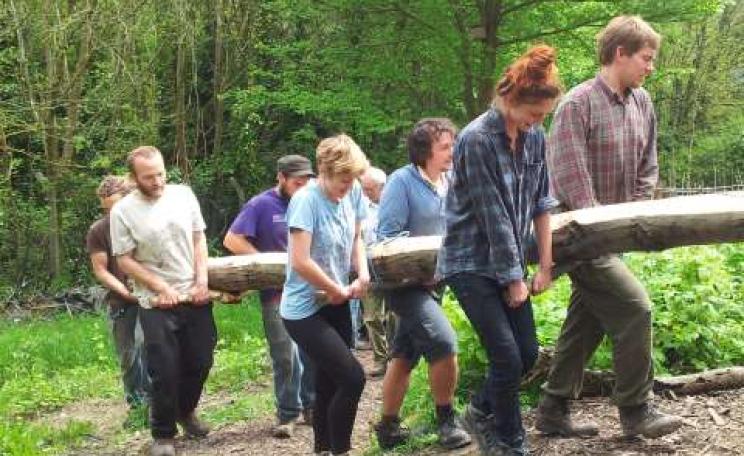
A Sussex-based forest gardening project has overcome adversity to celebrate its 20th anniversary, writes Jan Goodey. And now it features one of the most eco of eco-builds in Britain, using all local timber, clay, straw ... and wine bottles.